
Get a Big Website in Small Payments
for Wholesalers Beauty Parlours Manufacturers Construction Companies Boutiques Coaching Centres Plumbers Party Halls Photography Studios Banquet Halls Cleaning Services Salons Architects Logistics Companies Play Schools Law Firms Installation Services Gyms Dental Clinics Packers & Movers Interior Designers Electricians AC Repair Travel Agencies Suppliers Caterers Clinics Contractors Wedding Planners Security Services Fitness Centres Pest Control Services Event Management Brokers Tour Operators Lawyers Doctors Marketing Agencies Schools Makeup Artists Real Estate Agents Accounting Firms Courier
Join Entrepreneurs across India who are taking their Businesses Online.
Always Available
Let potential customers discover your business, services and contact details anytime, even outside business hours.
More Visibility
Give your business another place to be discovered when customers search for what you offer online.
Ways to Connect
Give customers multiple ways to reach you through calls, forms, maps, email, WhatsApp and social links.
Days Online
Your website keeps working for your business every day, without closing hours, holidays or interruptions.
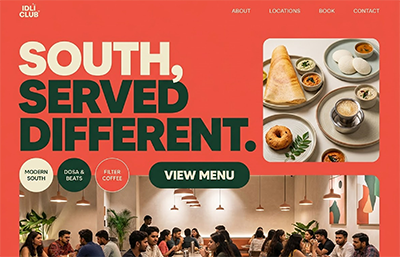
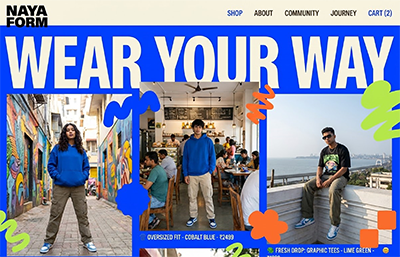
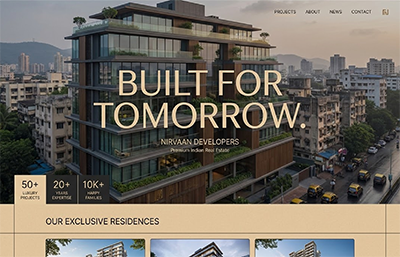
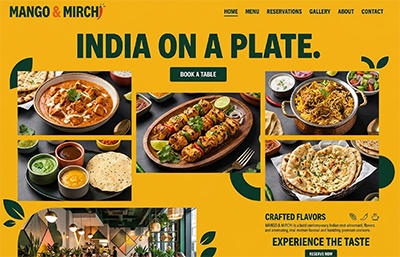



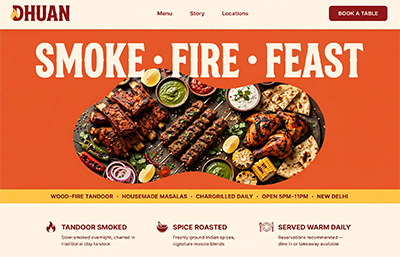
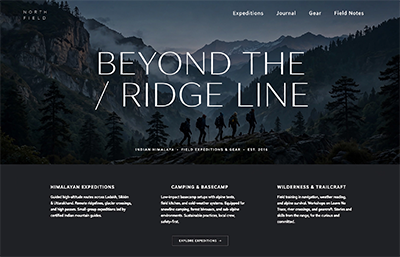
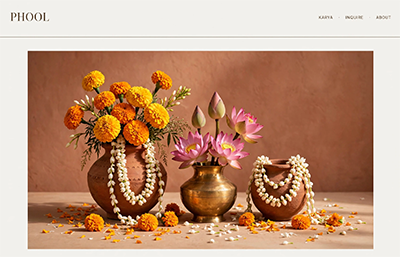
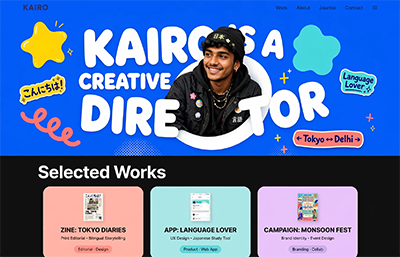
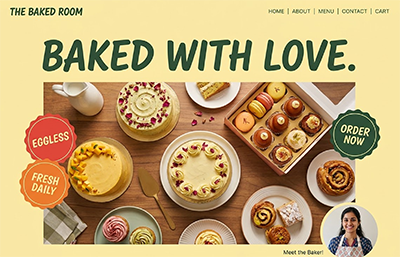
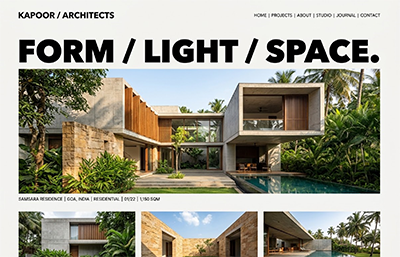

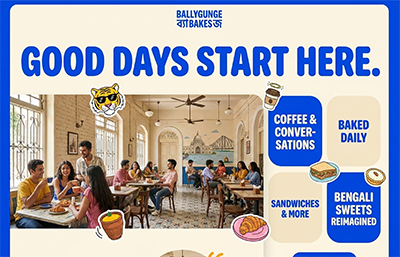
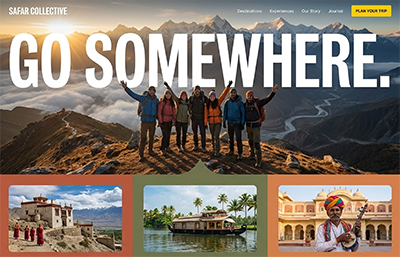
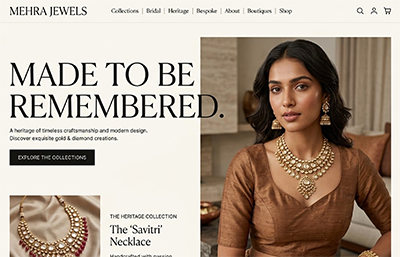
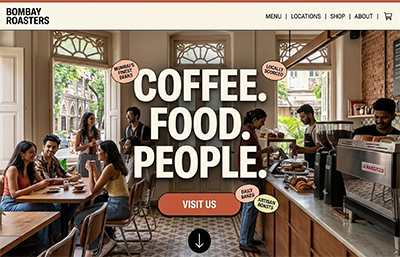
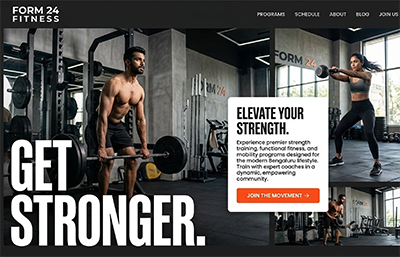
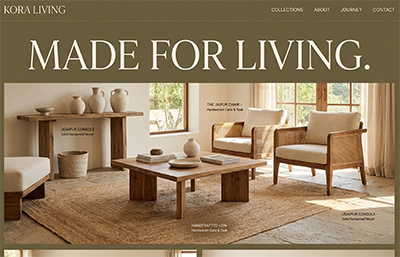
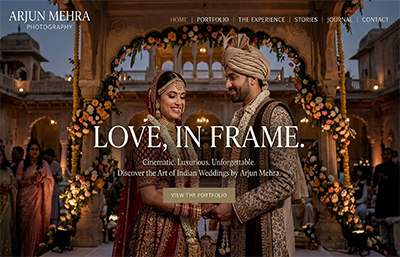
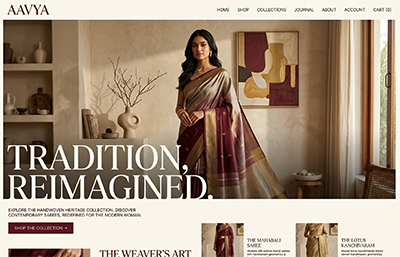
Your website should represent your business — not look like something generated in a few clicks.
We Don't Use AI
Your website is designed around your business, making something that feels intentional, distinctive and genuinely yours.
SEO Optimised
Your website is structured so search engines can properly understand, crawl and index your pages.
No Templates
Your business gets its own visual identity instead of looking like hundreds of other websites.
Modern & Responsive
From mobile browsing to larger screens, your website is designed to provide a smooth experience wherever customers visit.
While you're saving up to get your website, others are already going online and growing their businesses.
You don't have to wait until you have the full amount. We build custom websites around your business and requirements, while giving you flexible payment options that let you spread the cost.
Pricing
Professional Websites made affordable through Flexible Payment options
Business
Website
A polished, focused foundation for growing brands and service businesses.
₹10,000
One-Time Project Cost
No Yearly Maintenance Cost
Payment Options
Pay in Full ( 10% Off )
₹9,000
3 Months Plan
₹4,000 + ₹3,000 X 2
6 Months Plan
₹3,500 + ₹1,300 X 5
** One Year Free Domain, Hosting & SSL
E-commerce
Website
A refined storefront designed to turn browsing into confident buying.
₹20,000
One-Time Project Cost
No Yearly Maintenance Cost
Payment Options
Pay in Full ( 10% Off )
₹18,000
3 Months Plan
₹8,000 + ₹6,000 X 2
6 Months Plan
₹5,000 + ₹3,000 X 5
** One Year Free Domain, Hosting & SSL
Custom
Website
A distinctive digital experience shaped around your vision and ambitions.
₹35,000
One-Time Project Cost
No Yearly Maintenance Cost
Payment Options
Pay in Full ( 10% Off )
₹31,500
3 Months Plan
₹13,000 + ₹11,000 X 2
6 Months Plan
₹9,000 + ₹5,200 X 5
** One Year Free Domain, Hosting & SSL
Features
Business
E-com
Custom
- Domain
- Hosting
- SSL ( https )
- Pages
- Products
- E-commerce
- Online Payments
- 5 to 7
- 10 to 20
- 1000+
- 100+
- 1000+
- Interactive Design
- Dynamic Website
- Custom Layout
- UI and UX
- Mobile Responsive
- Add / Edit Text
- Add / Edit Images
- Image Slider
- Video Display
- Pop-Up Box
- Blog
- Click to Call
- Click to WhatsApp
- Contact Form
- Google Map
- Social Media Links
- SEO Optimized
- Visitor Monitoring
- Online Chat
- Unlimited Products
- Unlimited Categories
- Unlimited Attributes
- Add / Edit Products
- Order Management
- Bulk Excel Upload
- Cart & Checkout
- Product Search
- Product Reviews
- Product Filter
- Product Slider
- Customer Login
- Orders on Email
- Orders on WhatsApp
- Technical Support
- Copy Protection
- Website Security
- Admin Panel
If you’ve been waiting for the right time to get your business online, this is it — with easy part payments
How it Works
A great website for your business, made easier with flexible part payments
01
Tell Us What You Need
Call or WhatsApp us with your business details, website requirements, ideas, and goals. We understand your needs and recommend the plan that suits you best.
02
Choose Your Plan
Choose your preferred payment plan and make the initial payment. Once received, we begin designing your website according to the requirements discussed.
03
Review, Approve & Go Live
Once your website is ready, we share a live working demo within 4–5 days or the agreed timeline. Review it, request changes, and once approved, we take it live. Continue making payments according to your chosen plan.
Ready to Launch your Website ?
Take the first step towards a professional online presence. Tell us about your business — we’ll take it from there.
Already have a Website?
Then let's talk about Marketing
Tell us about your business goals. We’ll help you find the right marketing approach to reach more potential customers.
FAQs
Frequently Asked Questions
A professional website is more than a few pages placed online. It represents your business, gives customers a place to learn about you, and creates another way for people to discover, contact and trust your business. At EMI Web.in, we make professional websites available with flexible payment options so businesses can get started without having to arrange the entire website cost at once. Below are answers to the questions customers commonly ask about our websites, pricing, payment plans, design process, hosting, Google visibility, SEO, going live, maintenance and what happens after the website is completed.
PAYMENT & PRICING
EMI Web.in designs and develops professional websites for businesses, entrepreneurs, professionals, service providers, retailers and other organisations across India.
We understand what your business does, what you want your website to achieve, what information your customers need and what actions you want visitors to take.
Depending on your requirements, your website can include business information, services, products, enquiry forms, WhatsApp communication, call buttons, galleries, reviews, testimonials, booking systems, appointment requests, online payments, e-commerce functionality, blogs and other business features.
The important part is that we do not simply give you a generic website and ask you to fill in the blanks.
We discuss your requirements first and then build the website around your business, audience, content and objectives.
Our purpose is simple: to make professional websites easier for businesses to start while giving them the flexibility to spread their payments over time.
A good website can be an important business asset, but the payment structure offered by many website companies can make the decision unnecessarily difficult.
A business may know that it needs a website but may prefer not to put the entire amount into the project on day one.
That does not mean the business should have to postpone its online presence.
EMI Web.in was created around a simple idea:
Get the website you need today and pay for it through a structured payment plan.
The purpose is not to make websites cheap by removing everything important.
The purpose is to make the payment process more flexible while still providing a professionally designed website.
EMI Web.in is designed for businesses and professionals who want a proper website and prefer flexible payment arrangements.
This can include:
- Small businesses
- New businesses
- Established businesses
- Service providers
- Consultants
- Professionals
- Retailers
- Manufacturers
- Traders
- Restaurants and food businesses
- Fashion businesses
- Local and national brands
- E-commerce businesses
- Personal brands
- Freelancers
- Agencies
- Start-ups
- Event businesses
- Educational businesses
- Organisations and community groups
- Businesses moving from offline to online
- Businesses that already have social media but want a proper website
The website is not limited to one particular industry.
If your business needs a professional online presence, we can discuss what type of website would make sense for you.
No.
The payment plans offered by EMI Web.in are not bank loans, credit-card EMIs or third-party financing.
You are purchasing website design and development services from EMI Web.in and choosing a payment schedule that allows the agreed website cost to be paid over the selected period.
There is no separate loan application involved.
You do not have to take a personal loan to pay for your website.
You simply choose the payment arrangement available for your website package and make the payments according to the agreed schedule.
No.
A credit card is not required for our payment plans.
Our payment process is designed to be straightforward. Payments can be made manually through available payment methods such as UPI or bank transfer.
This means you do not need to apply for a credit card simply because you want to choose a payment plan for your website.
No.
There is no automatic deduction arrangement built into our normal payment plans.
You are not required to link your debit card or credit card for automatic payments.
Payments are made manually according to the selected payment schedule.
This also means you remain aware of when your next payment is due instead of having an automatic deduction happen without you actively making the payment.
Payments can be made manually through available methods such as:
- Google Pay
- PhonePe
- Paytm
- Bank transfer
When you decide to proceed, you can tell us your preferred payment method and we will provide the relevant payment details.
The exact payment schedule will depend on the website package and payment plan you select.
We currently offer three main website options:
Business Website — ₹10,000
Suitable for businesses that need a professional website to present their company, services, information and contact options online.
E-commerce Website — ₹20,000
Suitable for businesses that want customers to browse products and place orders online.
Custom Website — ₹35,000
Suitable for businesses requiring a more customised website structure, design or functionality beyond a standard business or e-commerce requirement.
The final scope of a website depends on the requirements discussed before the project begins.
No.
You can choose between full payment and available payment plans.
For customers who prefer to clear the website cost upfront, a discount is available.
For customers who prefer to spread the payment, 3-month and 6-month options are available for the relevant packages.
The purpose of the payment plans is to make the payment schedule more comfortable while allowing the website project to begin.
The current full-payment pricing provides a 10% discount.
The current examples are:
- Business Website: ₹10,000 → ₹9,000
- E-commerce Website: ₹20,000 → ₹18,000
- Custom Website: ₹35,000 → ₹31,500
The full-payment discount is available when the applicable website amount is cleared according to the full-payment arrangement.
If you prefer to spread the cost, you can choose the available 3-month or 6-month payment option instead.
The 3-month plan allows the website cost to be divided into three scheduled payments.
Current examples are:
Business Website — ₹10,000
₹4,000 + ₹3,000 + ₹3,000
E-commerce Website — ₹20,000
₹8,000 + ₹6,000 + ₹6,000
Custom Website — ₹35,000
₹13,000 + ₹11,000 + ₹11,000
The first payment allows us to begin the project.
The remaining payments are made according to the agreed schedule.
The website goes live only after the design has been approved and the payment due at that stage has been completed.
The 6-month plan spreads the website payment over six scheduled payments.
Current examples are:
Business Website — ₹10,000
₹3,500 + ₹1,300 × 5
E-commerce Website — ₹20,000
₹5,000 + ₹3,000 × 5
Custom Website — ₹35,000
₹9,000 + ₹5,200 × 5
This option is useful for businesses that prefer a smaller scheduled payment over a longer period.
The exact payment dates and requirements are discussed before the project begins.
The payment-plan price is based on the selected website package and agreed payment schedule.
There is no need to take a separate financing product.
However, the full-payment discount is different from the payment-plan price.
If you choose full payment, you receive the applicable full-payment discount.
If you choose a 3-month or 6-month plan, the website is provided under that payment arrangement.
The applicable amount and schedule are confirmed before work begins so that you know exactly what you are agreeing to.
If you want to clear your remaining scheduled payments earlier than planned, you can discuss it with us.
The important thing is that the payment arrangement should remain clear between both sides.
If you prefer to complete the payment sooner, contact us and we can confirm the outstanding amount and the appropriate way to complete it.
WEBSITE DESIGN & DEVELOPMENT
We do not expect you to immediately send a random payment without first understanding what you need.
The process starts with a discussion.
You can call or WhatsApp us with information about:
- Your business
- What you sell or provide
- Your website requirements
- Your preferred style
- Your existing website, if any
- Your social media presence
- Your target customers
- Features you need
- Examples of websites you like
- Your business goals
We then understand what you are trying to achieve and recommend the website option that best matches your requirements.
Once you decide to proceed, you choose the payment arrangement and make the initial payment.
The design process then begins.
The information depends on the type of website.
Typical information may include:
- Business name
- Logo
- Business description
- Services
- Products
- Prices where applicable
- Contact information
- WhatsApp number
- Phone number
- Email address
- Business photographs
- Product photographs
- Customer reviews
- Testimonials
- Social media links
- Address or service area
- Frequently asked questions
- Brochures or documents
- Videos
- Special offers
- Booking information
- Payment information
- Any specific website requirements
You do not need to know how to build a website yourself.
Our job is to understand your business information and turn it into a structured website.
That is completely fine.
Many business owners know what their business does but do not know exactly how a website should be designed.
You can show us examples of websites you like, explain the type of feeling you want, or simply describe your business and customers.
We can then suggest a suitable structure and direction.
You do not need to arrive with a complete website blueprint.
The discussion before the project begins exists specifically so that we can understand what you need.
We do not simply take one generic website and give the same design to every business.
Your website is designed around your business, content, requirements and visual direction.
The purpose is to avoid making your business look like hundreds of unrelated businesses using exactly the same website.
The structure, sections, content presentation, visual hierarchy and features can be adapted according to the project.
A professional website should represent the business behind it.
Our approach is not to simply ask an AI system to generate a website and deliver the result.
We design the website around the actual business requirements.
Human involvement matters because a website needs decisions about:
- Business positioning
- Content hierarchy
- Customer journey
- Calls to action
- Visual presentation
- Information structure
- Mobile experience
- Navigation
- Business objectives
Technology can assist with many things, but your website should not feel like an automatically generated collection of generic sections.
Yes.
The purpose of the initial discussion is to understand your business before designing the website.
A website for a consultant should not necessarily communicate information in the same way as an online store.
A restaurant, manufacturer, service provider, event company, professional, retailer and personal brand may all require different information structures.
Your website is therefore developed according to the requirements agreed for your project.
Yes.
Modern websites need to work properly across different screen sizes because many customers access websites through smartphones.
The website is designed to be responsive so that its layout can adapt to mobile, tablet and desktop screens.
This includes considerations such as:
- Text size
- Section spacing
- Buttons
- Images
- Navigation
- Forms
- Product displays
- Content arrangement
- Touch-friendly interactions
A website should not simply look good on the computer used to build it.
It should provide a usable experience for the people visiting it.
Yes.
The design process includes a review stage.
Once the working website is ready, we provide a live working demo so that you can see the website in an actual browser.
You can review it on your phone, tablet or computer.
If changes are required within the agreed project scope, you can communicate those changes before the final approval.
The objective is to make sure the final design represents your requirements before the website is taken live.
Yes.
A live working demo is provided before the final website is taken live.
The usual target is to provide the working demo within approximately 4–5 days or within another timeline agreed for the project, depending on the requirements and the availability of the necessary content.
The demo gives you an opportunity to review the website rather than approving a design based only on screenshots.
The timeline depends on the complexity of the website and how quickly the required information and materials are provided.
For a standard project, the working demo is generally targeted within approximately 4–5 days or the agreed project timeline.
More complicated websites can require additional time.
Factors that can affect the timeline include:
- Number of pages
- Amount of content
- Number of products
- Custom functionality
- Booking systems
- E-commerce requirements
- Payment integration
- Customer-requested changes
- Delays in receiving information
- Third-party services
We will discuss the expected timeline when the project requirements are understood.
The process is intentionally straightforward.
Step 1 — Tell Us What You Need
Call or WhatsApp us with your business details, website requirements, ideas and goals. We understand your needs and recommend the plan that suits you best.
Step 2 — Choose Your Plan
Choose your preferred payment plan and make the initial payment. Once received, we begin designing your website according to the requirements discussed.
Step 3 — Review, Approve & Go Live
Once your website is ready, we share a live working demo within 4–5 days or the agreed timeline. Review it, request changes and approve the final design. Once the required payment is cleared according to your selected payment arrangement, we take the website live.
For payment plans, the remaining payments continue according to the selected schedule.
GOING LIVE
The website goes live after the design has been reviewed and approved and the payment due at that stage has been completed.
For a 3-month or 6-month payment plan, the website does not simply become live immediately because the first payment was made.
- The process is:
- Initial payment
- Website design
- Live working demo
- Review and requested changes
- Final design approval
- Payment due at the go-live stage
- Website goes live
- Remaining scheduled payments continue according to the selected plan
This makes the process clear from the beginning.
With a 3-month payment plan, the project begins after the initial payment.
We design the website and provide the working demo.
You review the website and communicate the required changes.
Once the final design is approved, the payment due at that stage must be completed before the website is taken live.
After the website goes live, the remaining payments continue according to the agreed 3-month schedule.
The payment plan therefore spreads the payment obligation over the agreed period, while the website itself goes live after the design approval and applicable due payment.
The process is similar to the 3-month plan.
You make the initial payment and we begin designing the website.
You receive the working demo and have the opportunity to review the design and request changes.
After the design is approved, the payment due at that stage must be completed before the website goes live.
The remaining payments then continue according to the selected 6-month schedule.
The longer payment period gives businesses more time to complete the remaining payments without requiring the entire website amount on the first day.
With the full-payment arrangement, the applicable amount is paid according to the full-payment terms.
The full-payment option also provides the applicable 10% discount.
For the current packages:
- Business Website: ₹9,000
- E-commerce Website: ₹18,000
- Custom Website: ₹31,500
Once the website has been designed, reviewed and approved, the required final/due payment must be cleared before the website goes live.
The website is then taken live after the payment requirement has been completed.
The website goes live only after the applicable payment due at that stage has been completed.
For a payment plan, this means the payment due before going live must be cleared after the design has been approved.
For a full-payment arrangement, the final payment must be cleared before the approved website goes live.
This is why the payment and approval process is explained before work begins.
The exact features depend on the website package and requirements, but a professional website can include features such as:
- Mobile-friendly design
- Responsive layout
- WhatsApp button
- Call button
- Contact form
- Google Maps
- Photo gallery
- Customer reviews
- Testimonials
- Services section
- Product showcase
- Online enquiries
- Quote request forms
- Appointment requests
- Online booking
- Social media links
- FAQ section
- Business blog
- Video section
- Downloadable brochure
- Online payment functionality
- Order functionality
- Location and directions
- Website search
- Special offers
- Business email
- Security features
- SSL
- Backups
- Fast-loading structure
Not every website requires every feature.
The appropriate features are discussed according to what your business actually needs.
Yes.
A website can include direct communication options such as:
- Phone calls
- Contact forms
- Enquiry forms
These features are particularly useful for businesses where customers prefer to ask questions before making a purchase or booking.
The purpose is to reduce the distance between a website visitor and the business.
Instead of simply reading information and leaving, a visitor can have a clear way to contact you.
Yes.
A website can include enquiry forms designed around your business.
For example, a service business may ask for:
- Name
- Phone number
- Service required
- Location
- Requirement details
A quote-request website may ask for additional information relevant to preparing an estimate.
The form can therefore be designed around the information your business actually needs rather than using a meaningless generic contact form.
Yes, where the required booking functionality is suitable for the project.
Depending on your business, a website can be configured for appointment requests, booking systems or other scheduling functionality.
For example, booking functionality can be useful for:
- Consultants
- Fitness businesses
- Events
- Service appointments
- Classes
- Demonstrations
- Meetings
- Other time-based services
The exact booking requirements should be discussed before development because different businesses require different booking rules.
Yes.
If your business requires online selling, an e-commerce website can allow customers to browse products and place orders online.
An e-commerce website can include functionality such as:
- Product listings
- Product images
- Product descriptions
- Prices
- Product categories
- Shopping cart
- Checkout
- Online payment
- Order management
- Customer information
- Shipping-related functionality
- Product search
- Offers and promotions
The exact e-commerce setup depends on the products, payment method, shipping requirements and other business rules.
Yes.
An e-commerce website is not necessarily limited to the products you have on day one.
Products can be added later as your business grows.
This is one of the advantages of having your own website rather than relying entirely on a social-media profile.
You can continue expanding your online catalogue and organising products according to your business needs.
Yes, where online payment functionality is required and the appropriate payment gateway can be integrated.
The payment gateway itself may have its own account-opening requirements, transaction charges, verification procedures and policies.
A website can provide the technical structure for customers to make payments, but payment processing is ultimately handled by the selected payment provider.
The exact payment gateway and requirements should therefore be discussed before implementation.
The current website offering includes one year of domain, hosting and SSL.
This allows the website to be published under its own domain and hosted online without requiring the customer to arrange these components separately at the beginning.
SSL is important because it enables secure HTTPS access to the website.
After the included period, domain and hosting renewal costs may apply depending on the relevant services.
There is no separate yearly maintenance charge for the website itself under the standard offering.
However, website infrastructure such as domain registration and hosting may require renewal after the included period.
These are different from a compulsory yearly website-maintenance fee.
If additional work, new functionality, major redesigns or other work outside the original project scope is required later, that can be discussed separately.
The initial hosting is included for the stated first-year period.
After the included period, hosting renewal may be required.
The important distinction is that hosting is an infrastructure service required to keep a website available online, whereas website design is the actual development work performed for your business.
Any renewal requirements should be understood before the included period expires.
Security is an important part of running a professional website.
The website can include measures such as:
- SSL/HTTPS
- Secure hosting
- Secure configuration
- Updated software where applicable
- Appropriate access controls
No website can honestly be described as completely immune from every possible security threat.
Good security is an ongoing process rather than a one-time checkbox.
The objective is to build the website using appropriate security practices and maintain the underlying website environment responsibly.
GOOGLE & SEO
Your website can be made accessible to search engines and structured so that Google can understand and crawl its content.
However, there is an important difference between being indexed and ranking at a particular position.
Having a website does not automatically guarantee that it will appear at number one on Google.
Search visibility depends on many factors, including:
- Relevance
- Search intent
- Competition
- Content quality
- Website structure
- Authority
- Technical factors
- Search demand
- Industry
- Location where relevant
- Other ranking systems used by search engines
We therefore focus on creating a website that provides a proper foundation for search visibility rather than making unrealistic ranking promises.
The website is structured with search-engine visibility in mind.
This can include:
- Logical page structure
- Search-friendly content organisation
- Proper headings
- Relevant page titles
- Meta information
- Crawlable content
- Mobile-friendly design
- Fast-loading considerations
- Internal linking
- Clean URLs
- Appropriate image optimisation
- Search-friendly website architecture
SEO is not simply placing a keyword repeatedly on a page.
A website needs to communicate clearly with both visitors and search engines.
The objective is to build a strong technical and content foundation that can support future organic visibility.
No honest website company should guarantee a specific Google ranking.
Search results are influenced by competition, search intent, content, authority, technical quality, user behaviour and many other factors.
A company promising:
“Pay us and we guarantee number one on Google”
is making a promise that it cannot fully control.
Our approach is different.
We build the website so that search engines can properly understand, crawl and index its content, and we can help you build useful content around relevant business topics.
That creates a much more sustainable foundation than making ranking guarantees.
No.
A website gives your business an online location that Google can potentially crawl and index.
But simply publishing a website does not guarantee immediate visibility for every search.
Google needs to discover, crawl and process the website.
Search visibility then depends on the relevance and quality of the content and many other factors.
This is why website development and SEO should be viewed as related but separate things.
The website provides the foundation.
Useful content, technical quality, authority and ongoing optimisation can help build visibility over time.
Search engines can discover websites through several mechanisms, including links, sitemaps and other signals.
For a new website, it is useful to ensure that:
- The website is accessible
- Important pages are not blocked
- The site has a sitemap
- Important pages can be crawled
- Internal links connect relevant pages
- Search Console is configured
- URLs can be inspected where necessary
After publishing, Google may take time to crawl and process the pages.
Indexing is not necessarily instantaneous.
There is no universal number of days or weeks that guarantees SEO results.
A new website may begin appearing in search results after it is crawled and indexed, but meaningful organic traffic can take longer.
The timeline depends on factors such as:
- Competition
- Search volume
- Website authority
- Existing domain history
- Content quality
- Search intent
- Industry
- Number and quality of competing websites
- Backlinks and references
- Technical SEO
- Content publishing
- Overall website quality
This is why we do not promise an artificial “7-day SEO result”.
The goal is to build a website that gives the business a proper foundation for long-term search visibility.
BUSINESS QUESTIONS
Social media is useful, but a social-media profile and a website serve different purposes.
Your social profile exists within someone else’s platform.
Your website gives your business its own online destination.
A website can provide:
- Business information
- Services
- Products
- Detailed descriptions
- Enquiry forms
- Booking
- Online payments
- Product ordering
- Testimonials
- FAQs
- Google Search visibility
- Contact options
- Business information that customers can revisit
Social media can help people discover and engage with your business.
A website can give them a structured place to learn more and take action.
The two can work together rather than replacing each other.
If WhatsApp already generates business for you, that is useful.
The question is not whether the website should replace WhatsApp.
The question is whether your website can make the WhatsApp process stronger.
For example, instead of someone receiving only a phone number, they can first visit a website and see:
- What you do
- What you sell
- Your services
- Your products
- Your photographs
- Customer reviews
- Your location
- Frequently asked questions
- Your business information
Then they can click WhatsApp when they are ready to ask a question.
In that situation, the website acts as a digital business presentation while WhatsApp remains a communication channel.
A website is not reserved for large companies.
A small business can use a website to look more organised, explain its services clearly and give potential customers a place to find information.
It can be particularly useful when customers search for a business before contacting it.
A professional website can also help answer common questions before the customer calls.
For a small business, the goal does not necessarily need to be “build the biggest website possible”.
The better approach is:
Build the website that your business actually needs.
That may be a focused business website rather than a huge website with unnecessary features.
That is a reasonable question.
A website is a business purchase, so you should understand what you are paying for before proceeding.
Our process is designed to make the project clearer:
- We discuss your business and requirements.
- You choose the appropriate website package.
- You select your payment arrangement.
- You make the initial payment.
- We begin the design.
- You receive a working demo.
- You review the website.
- You request changes within the agreed scope.
- You approve the final design.
- The applicable due payment is completed.
- The website goes live.
This gives you an opportunity to see the actual working website before it becomes your final live website.
The goal is not to ask you to blindly trust a screenshot.
You should be able to review the actual website and understand what you are approving.
Yes.
A business does not necessarily need every possible feature from the beginning.
You can start with the functionality that is genuinely useful today and expand the website as the business grows.
Additional functionality can be discussed separately depending on what you need.
Yes.
A blog can be useful for publishing useful business information, answering customer questions and creating additional content around topics that people search for.
For example, a business could publish:
- Buying guides
- Service explanations
- Pricing information
- Frequently asked questions
- Industry information
- Product information
- How-to articles
- Comparisons
- Customer guides
- Business updates
The purpose should be to help real visitors rather than publish hundreds of meaningless keyword pages.
Because customers do not always earch Google using the name of a company.
They may search questions such as:
- How much does a website cost in India?
- Do I need a website for my business?
- How much does an e-commerce website cost?
- Can I pay for a website monthly?
- What should a business website include?
- How long does a website take to build?
- Website or Instagram — which is better?
- How can I get my business found on Google?
Useful articles can answer these questions before the visitor is ready to contact us.
This creates another path between a Google search and the business.
If you already own a domain, we can discuss using it for the new website.
This can be preferable when your existing domain already represents your established business.
If you do not have a domain, the included first-year domain arrangement can be discussed as part of the project.
Yes.
If you already have a website but are unhappy with its design, structure, performance or mobile experience, you can discuss a redesign.
The approach depends on the existing website, its platform, its content and what you want to improve.
Sometimes a redesign is appropriate.
In other cases, rebuilding the website cleanly can be a better option.
Migration depends on the existing website platform, hosting environment, domain setup, email configuration and other technical factors.
Before moving an existing website, the current setup should be reviewed so that important elements such as email, domain settings and existing search visibility are not unnecessarily disrupted.
In many cases, yes.
Business email and website hosting are related but separate services.
If you already use a business email address, the domain and DNS configuration should be handled carefully during a website migration or hosting change.
This is why an existing website or domain should be reviewed before making technical changes.
A website redesign or migration can affect search visibility if URLs, content, redirects, indexing or technical settings are changed incorrectly.
A proper migration should therefore consider:
- Existing URLs
- Important pages
- Redirects
- Metadata
- Internal links
- Sitemap
- Canonical settings
- Search Console
- Indexing
If your existing website already receives organic traffic, the migration should be planned rather than treating the new website as an entirely unrelated project.
Website analytics can be configured using an appropriate analytics platform.
Analytics can help understand things such as:
- Number of visitors
- Popular pages
- Traffic sources
- Device usage
- User behaviour
- Enquiries
- Conversions
The exact tracking setup depends on the requirements and privacy considerations of the project.
A website is a business tool, not a magic lead generator.
A website can make it easier for people to discover your business, understand what you offer and contact you.
But traffic and enquiries depend on factors such as:
- Search visibility
- Advertising
- Content
- Competition
- Offer
- Business reputation
- Website experience
- Customer demand
- Conversion process
For example, a beautifully designed website with no traffic source may receive very few visitors.
That is why website development, Google Ads, SEO, social media and other marketing activities should be viewed as complementary parts of a wider marketing strategy.
Search engines are increasingly using AI-generated experiences alongside traditional search results.
There is no legitimate button that guarantees that a website will appear in an AI answer.
The strongest approach is still to provide useful, original, clearly structured information that search engines can understand.
That includes useful business information, detailed service explanations, original articles, appropriate technical SEO, good website structure and content that genuinely answers questions.
Google’s current guidance specifically says that its generative search features continue to rely on established SEO fundamentals and useful, non-commodity content.
There is no magic “AI SEO” switch.
Terms such as AEO, GEO and other marketing labels are often used to describe strategies for making content useful to answer engines and AI-powered search systems.
But the fundamentals remain important:
- Clear information
- Useful answers
- Original content
- Good website structure
- Relevant expertise
- Crawlable pages
- Strong internal linking
- Good user experience
- Clear business information
The best approach is not to write robotic content for an algorithm.
Write genuinely useful content that a human would want to read and that a search engine can understand.
No.
EMI Web.in works with businesses across India.
The website and service are not restricted to customers from one particular city.
Communication can be handled remotely through phone, WhatsApp and other digital methods, allowing the website development process to be managed even when the client and website team are in different parts of India.
No.
The website development process can be handled remotely.
You can communicate your requirements through phone or WhatsApp, share your content and references digitally, review the working website online and provide feedback remotely.
This means a business does not need to be physically located nearby to work with EMI Web.in.
A logo is useful, but not every business has one when it starts building a website.
If you already have a logo, it can be incorporated into the website.
If you do not have one, the website can be designed around your business name and visual direction, while logo requirements can be discussed separately if needed.
You can still start a website project.
However, strong images can significantly improve the appearance and credibility of a website.
Depending on the business, useful imagery may include:
- Product photographs
- Business photographs
- Team photographs
- Office or showroom photographs
- Work samples
- Before-and-after images
- Event photographs
- Service photographs
If suitable original images are available, they are generally preferable to filling the website with generic stock photography.
We can discuss the information required and help structure the content requirements.
You should at least be able to explain:
- What your business does
- What you offer
- Who you serve
- Why customers should choose you
- How customers can contact you
The website can then be structured around this information.
If substantial professional copywriting is required, that should be discussed separately as part of the project scope.
Yes.
A website is not a one-time printed brochure that can never change.
Business information, services, products, offers, images and articles can be updated as the business develops.
The exact level of self-editing and management depends on the website configuration.
If you need regular updates or new functionality later, those requirements can be discussed separately.
The website scope is established before development begins so that both sides understand what is being built.
If you later request a feature that was not part of the original agreed scope, we can review the requirement and determine whether it can be added and whether additional development work is necessary.
This is preferable to pretending that every possible feature is automatically included.
Clear scope protects both the customer and the website developer.
Website design is reviewed before the website goes live.
You receive the working demo and can provide feedback and request changes within the agreed project scope.
The best way to avoid major changes late in the project is to communicate your preferred style, examples and business requirements as clearly as possible before development begins.
We can take inspiration from websites you like, including their layout ideas, functionality and general visual direction.
However, your website should be developed for your own business rather than simply copying another company’s identity or protected creative work.
The objective is to understand what you like and then create an appropriate solution for your business.
A PDF can be useful, but a website provides a much more interactive experience.
A website can allow customers to:
- Navigate between pages
- Search information
- Contact you
- WhatsApp you
- Call you
- Submit enquiries
- Book appointments
- Browse products
- Place orders
- Make payments
- Read reviews
- Find your location
- Read articles
A PDF can be part of a website, but it should not necessarily be the entire online presence of a business.
No.
Google is one potential traffic source.
People can also reach your website through:
- YouTube
- Business cards
- QR codes
- Google Ads
- Other advertisements
- Referrals
- Directly typing your domain
- Links shared by existing customers
A website therefore acts as a central online destination for the business.
Yes.
Your website can be shared through WhatsApp just like any other web address.
You can also use your website link in:
- WhatsApp messages
- Social-media profiles
- Instagram bio
- Facebook page
- Email signatures
- Digital advertisements
- Business cards
- QR codes
- Promotional material
This allows the website to work together with the other channels where your customers already interact with your business.
Yes.
A website can be used as the destination for digital advertising campaigns.
For example, an advertisement can direct someone to:
- A service page
- A product page
- A quotation form
- A booking page
- A contact page
- A landing page
- The main website
The landing experience matters because paying for advertising does not help much if visitors reach a confusing or poorly structured website.
Professional does not simply mean expensive or visually complicated.
A professional website should make it easy for a visitor to understand:
- Who are you?
- What do you offer?
- Why should I consider you?
- How can I contact you?
- What should I do next?
It should also work properly across devices, present information clearly, load efficiently and provide appropriate trust signals.
Good design is therefore not just decoration.
It is communication.
Free or low-cost website builders can be appropriate for some situations.
The question is whether the platform and design provide what your business actually needs.
A professionally developed website can provide greater control over:
- Design
- Structure
- Content
- Features
- Integrations
- Branding
- Search structure
- Customer journey
- Business functionality
For a serious business, the website should be treated as part of the business infrastructure rather than simply as a digital poster.
You do not need to decide completely on your own.
Tell us what your business does, what you want the website to accomplish and what features you believe you need.
We can then recommend the most appropriate option.
The objective is not to push every customer toward the most expensive package.
The objective is to select the website type that makes sense for the business.
Yes.
A new business often needs a website to establish its online identity from the beginning.
A website can provide a professional place where potential customers can learn about the new business, understand its services and contact it.
The flexible payment options can also make it easier for a new business to begin its website project without committing the entire website budget at the start.
Yes.
An established business may already have customers but still have an outdated website, no website, poor mobile experience or an online presence that does not represent the current business.
A new website can be used to modernise the presentation, improve information structure and create better ways for customers to enquire or purchase.
The idea is simple:
- Professional websites should be easier to start.
- Your business should not have to wait indefinitely before establishing a proper online presence simply because you would prefer to spread the cost.
- At the same time, flexible payments should not mean that the website becomes a low-quality product.
- EMI Web.in combines professional website design with structured payment options.
- You decide what your business needs.
- You choose the appropriate website package.
- You choose the available payment arrangement.
- We build the website.
- You review the working design.
- You approve it.
- The applicable payment due before going live is completed.
- The website goes live.
- And the remaining payments continue according to the selected plan.
That is the idea behind : Get a Big Website in Small Payments.